
Unsent Project Color Meaning — What Each Shade Reveals About Your Emotions
Unsent Project Color
Colors That Speak Louder Than Words
When words fall short, colors take over.
That’s the quiet magic behind the Unsent Project color meanings — every hue carries the weight of human emotion, turning millions of anonymous messages into a visual symphony of love, loss, and healing.
Each color in the Unsent Project isn’t random. It’s chosen deliberately by the sender — a reflection of what they felt when typing a message they never sent. From fiery red to calm blue, each shade tells its own story.
What Is the Unsent Project Color System?
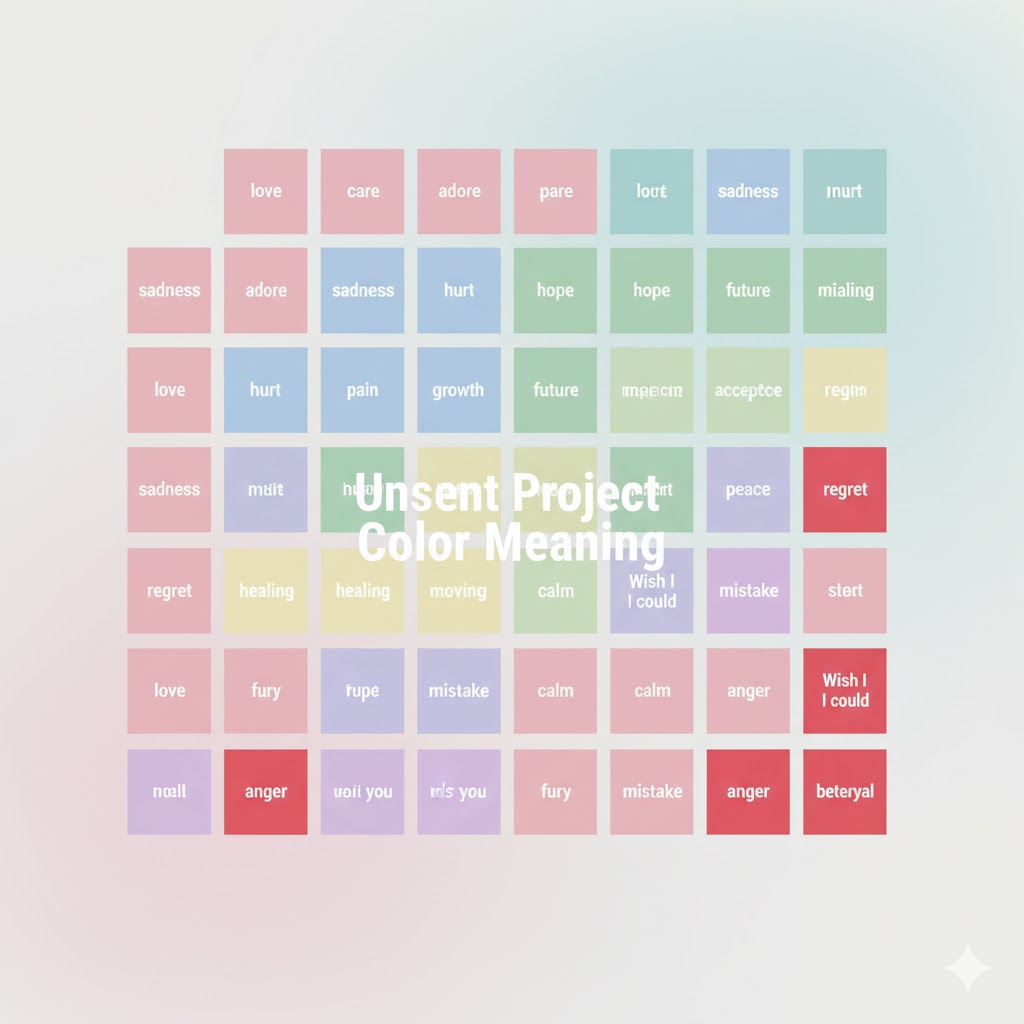
In the Unsent Project, every message is tagged with a color before it’s submitted.
This color represents the emotional tone behind the unsent words.
It’s not just design — it’s emotion translated visually.
When you scroll through the archive, colors create an emotional landscape, showing how collective feelings of love, regret, and hope are expressed through shades rather than sentences.
The creator of the Unsent Project, Rora Blue, used color psychology to help people express feelings they couldn’t describe. The result is a living rainbow of emotions — a human archive coded in color.
The Meaning Behind Each Color in the Unsent Project
Every hue tells its own emotional truth. Here’s what each color generally represents within the archive:
🔴 Red — Love, Desire, Passion
Red is the heartbeat of the project — full of intensity and honesty.
Messages tagged red often read like confessions: letters to first loves, exes, or people who changed someone’s life.
“I still love you, but I know I shouldn’t.”
Red means you cared deeply — even if the story didn’t end how you hoped.
🔵 Blue — Sadness, Distance, Reflection
Blue messages often carry a sense of longing or emotional distance. They’re written for people we miss but no longer talk to.
“You drifted away, and I never knew how to pull you back.”
Blue represents acceptance and quiet pain — the calm after heartbreak. It’s about reflection, not regret.
🟢 Green — Growth, Forgiveness, Healing
Green messages come from people learning to let go.
They express closure, gratitude, and forgiveness—either for someone else or themselves.
“I’m not angry anymore. I just hope you’re okay.”
Green marks emotional maturity — the point where pain becomes peace.
🟣 Purple—Introspection, Understanding, Closure
Purple is thoughtful and calm—the color of emotional wisdom.
Writers who choose purple are often looking back at love or loss with understanding.
“You taught me more by leaving than staying.”
It’s the color of acceptance — when pain turns into perspective.
🟡 Yellow—Friendship, Hope, Light
Yellow messages radiate optimism and warmth.
They’re written to best friends, family members, or people who made life brighter.
“You were never mine, but you made me smile when no one else could.”
Yellow symbolizes joy, nostalgia, and the reminder that even short connections can leave long-lasting light.
⚫ Black—Loss, Despair, Final Goodbyes
Black represents grief, endings, and heartbreak too deep for words.
It’s used for messages to those who passed away or relationships that truly ended.
“You left too soon. I still have so much to say.”
Yet even in its heaviness, black holds dignity — the courage to face finality and still write through it.
🩷 Pink — Vulnerability, Care, and Soft Love
Pink carries gentleness and sincerity.
It’s often chosen by people who still care, even after everything.
“I hope you know I tried my best.”
It’s the color of love that doesn’t demand — only wishes well.
Why Colors Matter in the Unsent Project
Color gives emotion a form we can see.
When you scroll through the archive, the rainbow of submissions feels like a heartbeat map of humanity — each shade reflecting millions of invisible feelings.
But there’s more behind it:
- Emotional clarity: Choosing a color helps people understand how they truly feel.
- Visual empathy: Readers instantly sense tone without even reading the words.
- Artistic meaning: Colors turn text into digital art, creating a powerful sensory experience.
This emotional design is what made the project stand out — it’s not just about words, but how they feel.
What Do the Colors Mean Psychologically?
The project’s color system is grounded in real emotional psychology:
| Color | Emotional Meaning | Psychological Connection |
| Red | Love, attraction, urgency | Activates passion and memory |
| Blue | Calm, sadness, nostalgia | Triggers introspection |
| Green | Healing, renewal | Associated with peace and balance |
| Purple | Wisdom, reflection | Linked to creativity and closure |
| Yellow | Joy, optimism | Stimulates warmth and positivity |
| Black | Grief, loss | Represents depth and emotional finality |
| Pink | Vulnerability, affection | Soothes anxiety and expresses softness |
Every submission becomes a small emotional study — proving that humans have always felt the same, even if they express it differently.
The Art Behind Color and Emotion
The Unsent Project blurs the line between psychology and art.
By combining color, typography, and anonymous stories, it creates visual poetry out of silence.
Colors act as emotional filters—they make invisible feelings visible.
Scrolling through thousands of hues feels like walking through an emotional gallery, where every shade has a pulse.
“It’s not just color—it’s what the heart looked like when I wrote it.”
Why People Connect With Color Meanings
The beauty of the Unsent Project’s color meanings lies in universality.
Even without words, we understand what each shade feels like.
It’s emotional empathy without translation—proof that sadness, love, and hope look the same no matter where you live.
That’s why millions keep returning—not just to read messages, but to feel through colors.
Conclusion – The Palette of Human Emotion
The Unsent Project turns human emotion into art.
Each hue is a language—red for love, blue for loss, green for growth, and yellow for hope.
Together, they form a visual diary of what it means to be human.
Every shade carries a story; every color whispers what words couldn’t.
Because sometimes, color says what language can’t.