Many people use the terms electronic signature and digital signature as if they mean the same thing. They do not. Understanding the difference matters because each method serves a different purpose, carries different legal weight, and fits different types of documents. Choosing the wrong one can leave your agreements harder to defend or your workflows slower than they need to be.
An electronic signature is any mark or action that shows a person’s intent to sign. It can be a typed name, a clicked checkbox, or a drawn signature on a touchscreen. A digital signature is a specific type of electronic signature that uses cryptographic technology to verify the signer’s identity and detect tampering after signing. Platforms like adobe esignature handle both approaches, but the right choice depends on the document type, the industry, and the level of proof you need to leave behind.
What Is the Difference Between an Electronic Signature and a Digital Signature?
An electronic signature is the broader category. It covers any electronic sound, symbol, or process attached to a record with the intent to sign. Under the ESIGN Act and UETA, electronic signatures carry the same legal weight as handwritten signatures for most business contracts when consent, intent, and attribution are properly documented.
A digital signature is a narrower, more technical method. It uses public key infrastructure to create a unique digital certificate linked to the signer. The certificate is issued by a certificate authority, and the signed document includes a cryptographic hash that breaks if anyone modifies the file after signing. This makes digital signatures useful for documents where tamper evidence and verified identity are critical.
The practical difference comes down to evidence of strength. A basic electronic signature records that someone clicked or typed. A digital signature also records that the document has not changed since signing and that the signer held a verified certificate at the time of signing.
When Should You Use an Electronic Signature?
Electronic signatures are the right choice for most routine business documents. Employee onboarding packets, sales contracts, purchase orders, service agreements, and non-disclosure agreements all work well with standard electronic signatures. The process is simple, fast, and legally enforceable under ESIGN and UETA.
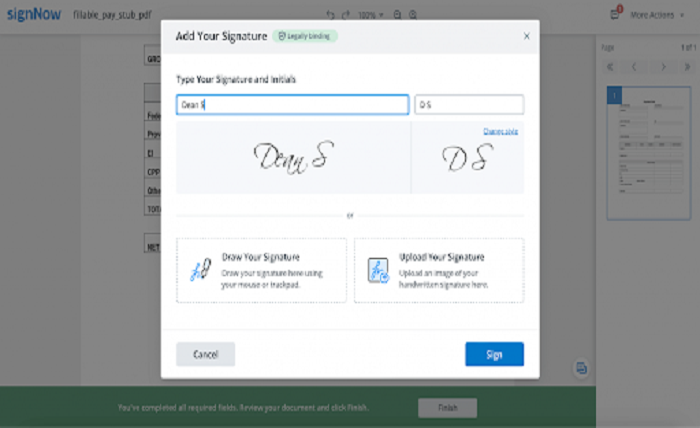
The process works like this. You upload a document, place signature fields, and send it to recipients. They open the email, review the document, and sign by typing their name, drawing with their mouse or finger, or uploading an image of their handwritten signature. The platform records the action with a timestamp and stores the completed document.
For organizations handling high volumes of documents, electronic signatures offer significant efficiency gains. signNow users report completing 80% of documents sent for signature, with an average ROI of 700% in the first year. Employees save up to six hours per week that were previously spent on printing, scanning, and manual follow-ups.
When Should You Use a Digital Signature?
Digital signatures are better suited for documents that require stronger identity verification and tamper protection. Regulated industries often need digital signatures for specific compliance requirements. Life sciences companies use them under 21 CFR Part 11. Healthcare organizations may need them for certain electronic protected health information workflows.
A digital signature workflow adds several steps beyond a basic electronic signature. The signer must obtain a digital certificate from a trusted certificate authority. The signing software uses this certificate to create a unique cryptographic hash of the document. If anyone modifies the document after signing, the hash no longer matches, and the signature is invalidated.
Digital signatures also support long-term validation. Even after the original certificate expires, techniques like PAdES Long-Term Validation preserve the evidence needed to verify the signature years later. This matters for documents that must remain verifiable for regulatory compliance or legal discovery long after the signing date.
How Do Compliance Requirements Affect Your Choice?
The compliance landscape determines which signature method you need. For most U.S. businesses, ESIGN and UETA provide a solid legal foundation for electronic signatures. These laws cover the majority of commercial contracts and business agreements.
Industry-specific regulations add additional requirements. HIPAA requires covered entities to implement administrative, physical, and technical safeguards for electronic protected health information. While HIPAA does not mandate digital signatures, the security rule requires controls like unique user identification, integrity controls, and audit controls. A Business Associate Agreement is required before using any eSignature platform for PHI.
The FDA’s 21 CFR Part 11 rule applies to electronic records and signatures in life sciences. It requires that electronic signatures include distinct user IDs combined with passwords or biometrics. The rule also requires that records be protected against tampering and that audit trails capture who made changes and when.
How Does signNow Support Both Signing Methods?
signNow offers flexibility to use either signature method depending on the document and workflow requirements. For routine contracts and daily approvals, the platform provides straightforward electronic signature tools. You upload, place fields, and send. Recipients sign from any device without creating an account.
For workflows that need stronger controls, signNow supports digital signature capabilities. The platform integrates with certificate authorities and provides audit trails that capture detailed signer information, timestamps, and document history. These features support compliance with HIPAA, 21 CFR Part 11, SOC 2 Type II, PCI DSS, and other regulatory frameworks.
The platform serves over 28 million users and 352 Fortune 500 companies, including Apple, Walmart, FedEx, Tesla, and Xerox. Pricing starts at $8 per user per month for the Business plan when billed annually, with unlimited users and no envelope caps on all paid plans. This structure allows organizations to deploy eSignature broadly while reserving digital signature controls for the specific documents that need stronger verification.
What Happens If You Choose the Wrong Method?
Using a basic electronic signature for a document that requires digital signature controls can create compliance risks. A regulator reviewing the record may find that the evidence does not meet the required standard for signer verification or tamper protection. This can lead to fines, rejected filings, or challenges to the document’s validity.
On the other hand, using digital signatures for every document adds unnecessary complexity. Recipients may need to obtain digital certificates, which creates friction and slows down completion. Routine documents that would work fine with a simple eSignature end up taking longer than they should.
The best approach is to match the method to the document risk. Use electronic signatures for the bulk of your daily agreements. Reserve digital signatures for the specific documents that regulations or internal policies require to have stronger integrity controls.
FAQ
What is the legal difference between an electronic signature and a digital signature? An electronic signature is legally recognized under ESIGN and UETA as any mark or action showing intent to sign. A digital signature is a type of electronic signature that adds cryptographic verification. Both can be enforceable when properly documented.
Does HIPAA require digital signatures? HIPAA does not mandate digital signatures specifically. It requires covered entities to implement safeguards for electronic protected health information, including unique user identification, integrity controls, and audit controls. A BAA with your eSignature vendor is required.
What is 21 CFR Part 11 and when does it apply? 21 CFR Part 11 is an FDA regulation that sets standards for electronic records and electronic signatures in life sciences. It applies to records created in drug development, clinical trials, manufacturing, and other FDA-regulated activities. It requires distinct user IDs, passwords, and audit trails.
Can a digital signature expire? The digital certificate used to create a digital signature can expire. However, long-term validation methods like PAdES LTV preserve the verification evidence so the signature remains verifiable even after the certificate expires.
How do I know which signature method my business needs? Review the specific regulations that apply to your industry. Routine commercial contracts work with standard electronic signatures under ESIGN and UETA. Regulated industries like healthcare and life sciences may need additional controls based on HIPAA, 21 CFR Part 11, or other applicable rules.
What happens if someone modifies a digitally signed document? The cryptographic hash embedded in the document changes, breaking the signature. Any recipient can detect the modification. The original signature is invalidated, and the audit trail shows when and how the change occurred.